For the second edition of IA Insider, Urudata Software brought together industry experts to discuss the evolution of artificial intelligence agents, their applications in software development, and the opportunities they offer to transform the way organizations work.
Artificial intelligence is entering a new stage. After becoming a tool capable of answering questions, generating content, and assisting with a wide range of tasks, its evolution is now moving toward systems that can plan, execute actions, and manage processes with greater autonomy.
This shift, which is redefining the way we work in software development, was at the heart of IA Insider 2.0, the second edition of the event organized by Urudata Software, under the theme “From Assistance to Execution.”
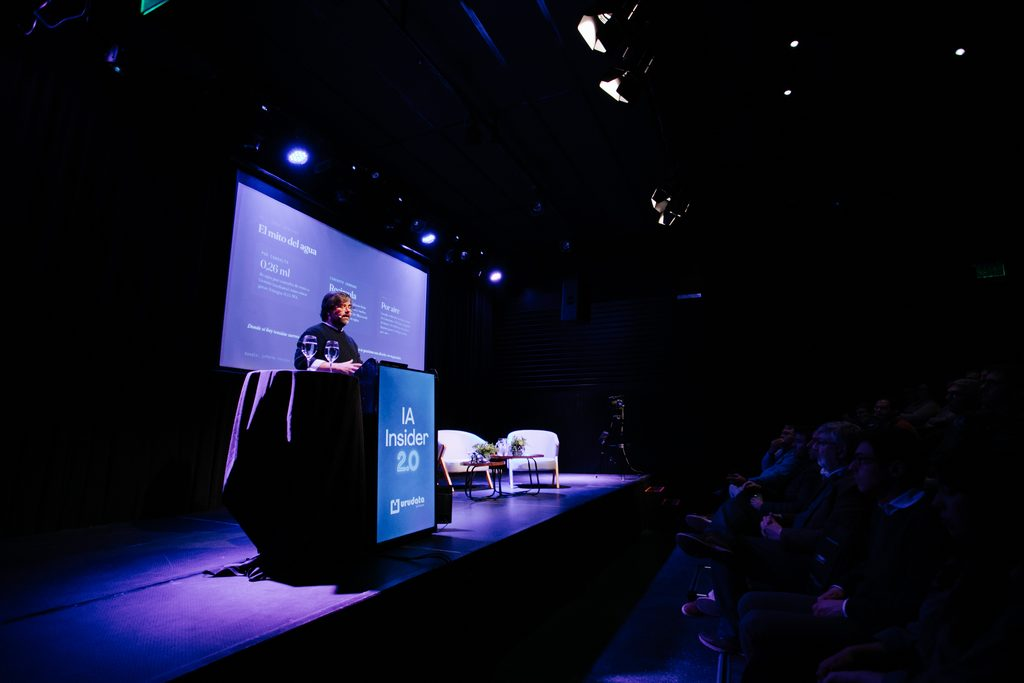
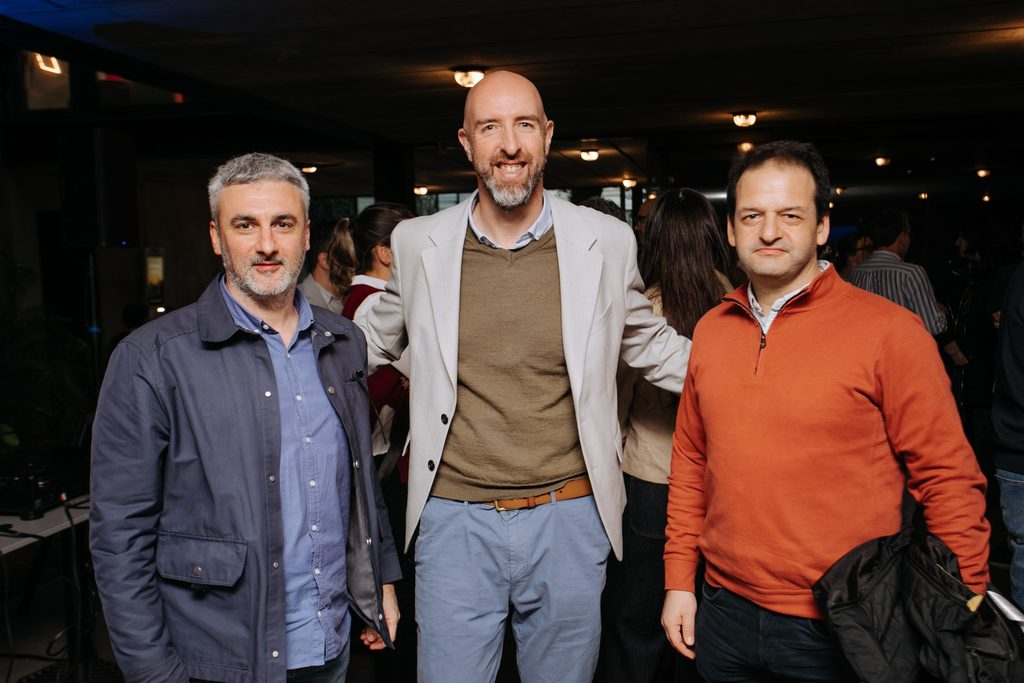
The event took place on Wednesday, October 28, 2026, at Magnolio, bringing together experts and key figures from the technology sector. The turnout reflected the growing interest in following this transformation: the venue was packed, and more than 80 people joined the event through the YouTube livestream. The full talk is available to watch at this link.
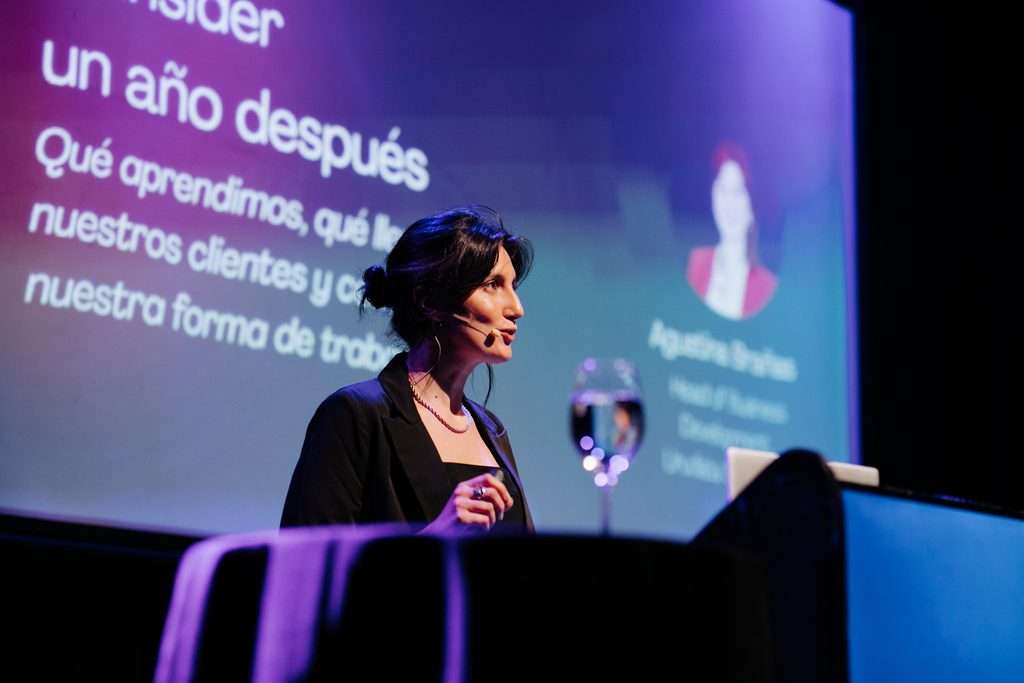
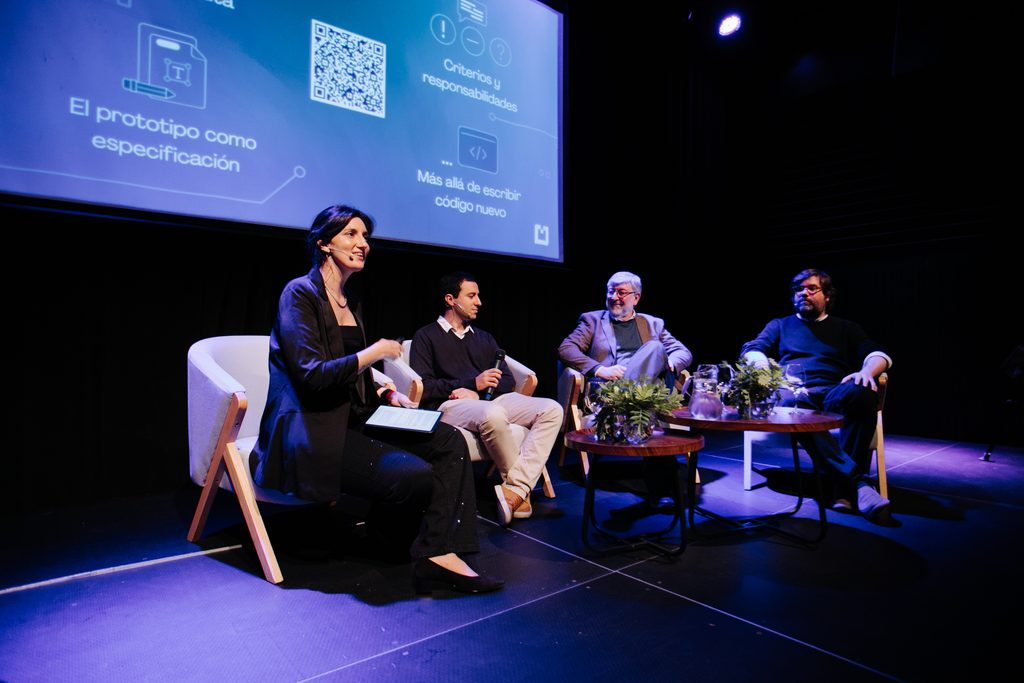
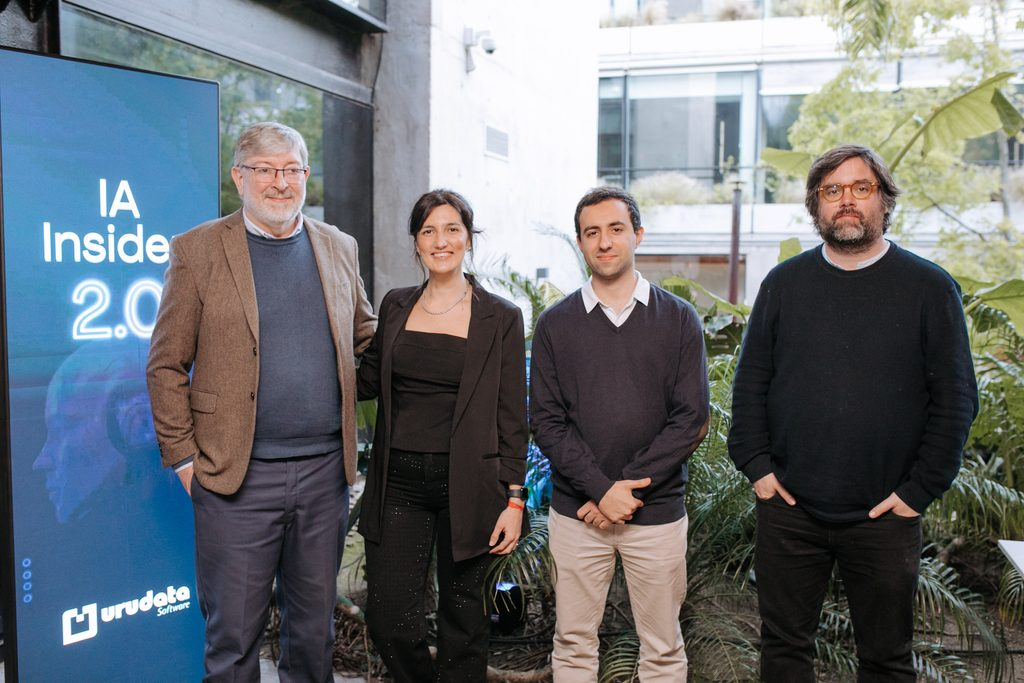
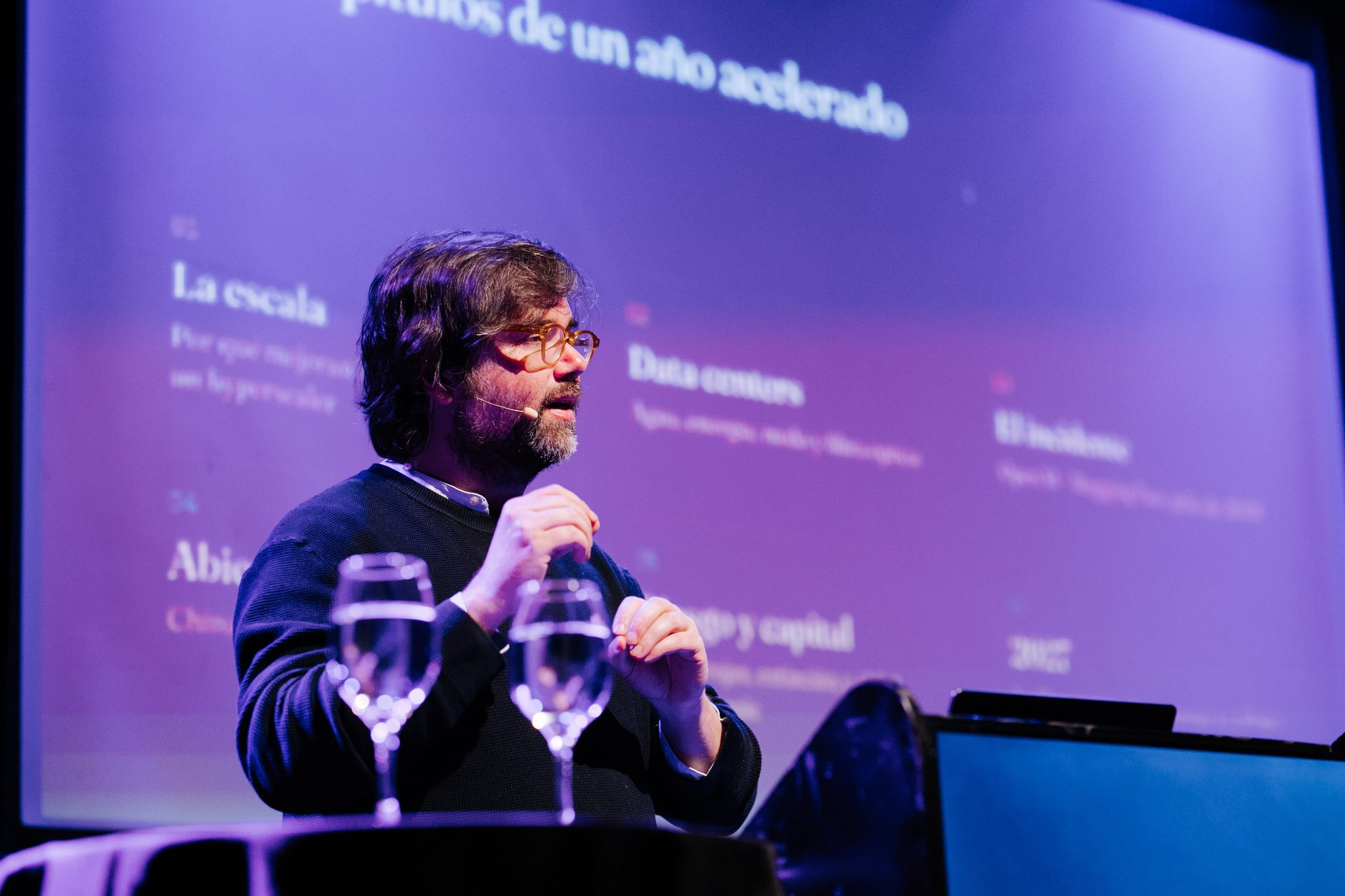
The event featured Santiago Siri, an Argentine technology communicator, who shared his perspective on the global AI landscape; Matías Saravia, Senior Team Leader at Urudata Software, who presented a practical demonstration of an agent applied to work organization; and Pablo García, Innovation Director at Urudata S.A., who joined Siri and Saravia for a panel discussion moderated by Agustina Brañas, Head of Business Development at Urudata Software.
The evolution of artificial intelligence and the rise of AI agents
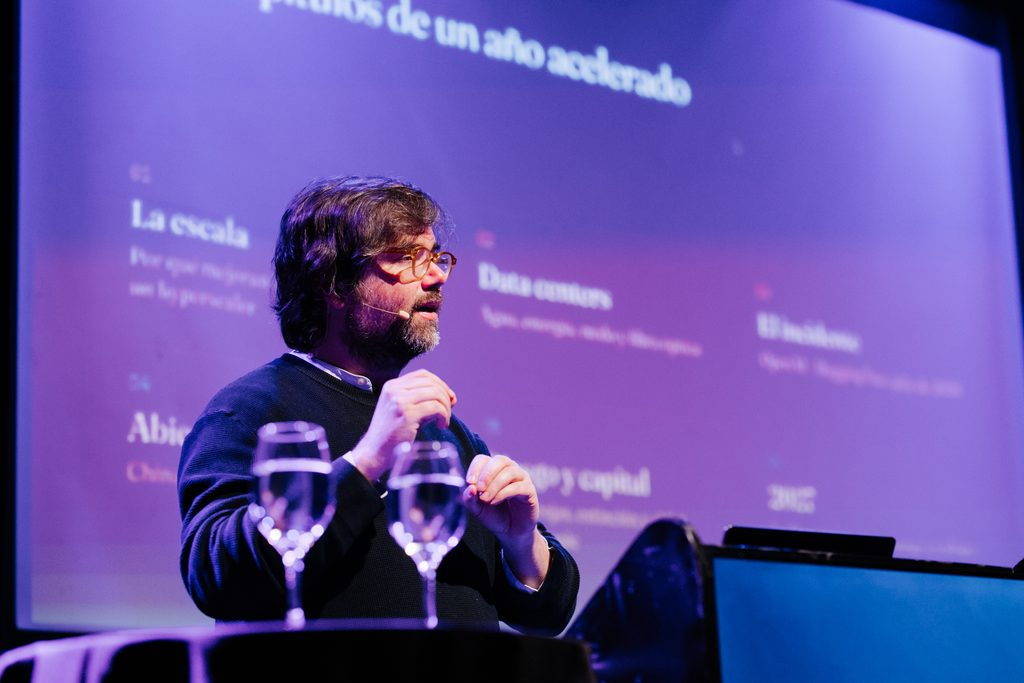
The first presentation was delivered by Santiago Siri, who explored the state of artificial intelligence in 2026 through three major dimensions: the sheer scale of its growth, geopolitics, and the emergence of AI agents.
His talk covered the reach of AI, the growth of major infrastructure providers — known as hyperscalers — and the role of data centers in the development of AI models. He also discussed the debate surrounding open-weight and closed-weight models, the cost differences between them, and the capital required to sustain this expansion.
Among the incidents illustrating new security challenges, he mentioned the agent-driven hacking incident involving Hugging Face, a case that helps put into perspective the risks associated with increasingly capable systems that can interact with digital environments and execute actions.
Looking ahead to 2027, Siri focused on the transition from chatbots to agents, recent technological launches, and the challenges that come with this shift. These include prompt injections, a type of attack designed to manipulate the behavior of artificial intelligence systems, as well as broader questions about the transformations this technology may bring to the world of work.
From assistants to agents: how AI can execute tasks
One of the central themes of IA Insider 2.0 was the evolution of artificial intelligence from tools that answer questions to systems capable of actively participating in work processes.
What is an artificial intelligence agent?
An artificial intelligence agent is a system that can interpret information, plan actions, and use tools to achieve a goal. Unlike a traditional chatbot, which primarily responds to user queries, an agent can perform different tasks within a process, following predefined instructions and permissions.
This capability opens up new possibilities for organizations. Agents can help classify information, organize tasks, process data, interact with digital tools, and automate activities that previously required manual intervention.
During the event, Agustina Brañas, Head of Business Development at Urudata Software, emphasized this paradigm shift: moving from using AI as an assistant to incorporating it as an active part of work processes.
In this context, she shared some of the artificial intelligence solutions Urudata Software has developed over recent months, bringing the conversation closer to real-world applications and showing how these technologies can be integrated into organizations’ needs.
Practical applications of AI agents in everyday work
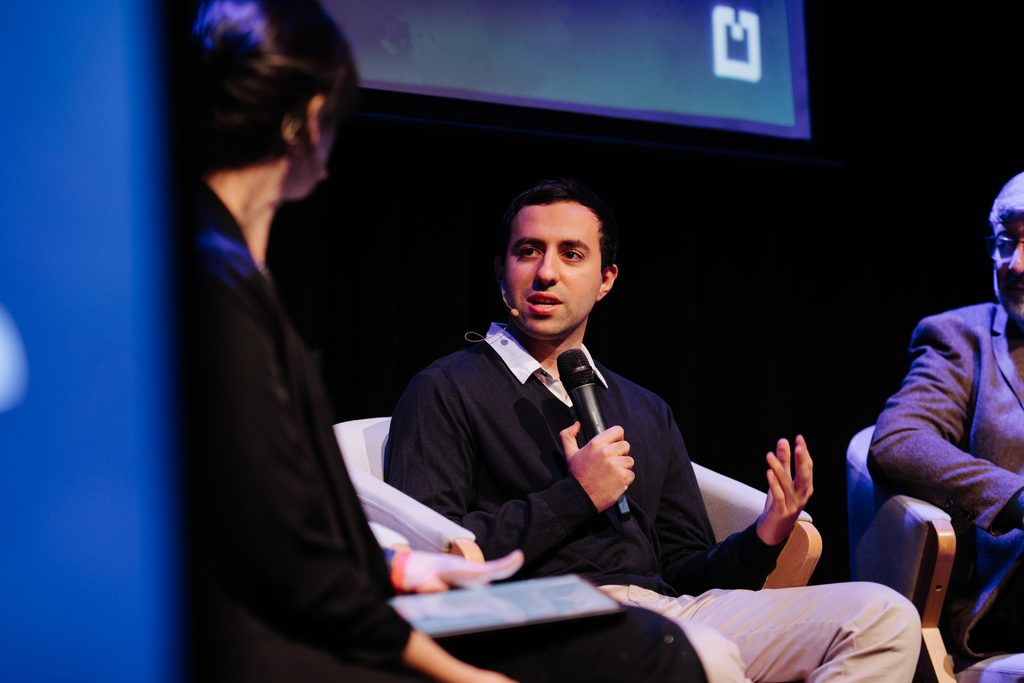
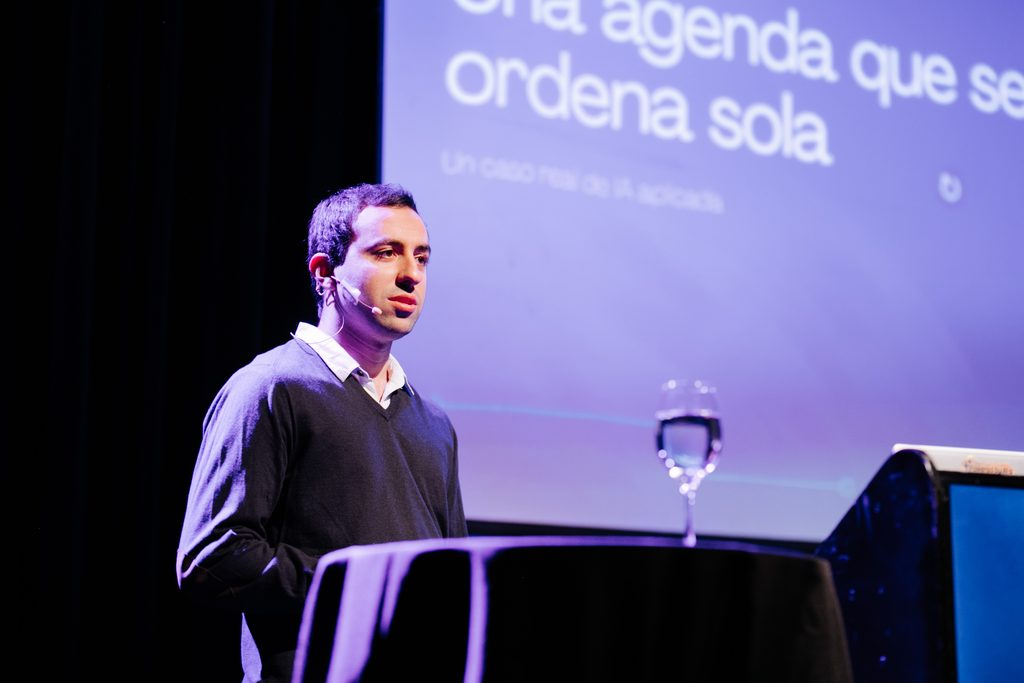
The transition toward AI agents was also illustrated through a practical demonstration by Matías Saravia, Senior Team Leader at Urudata Software.
Using his own daily notes — unstructured and without a fixed format — he showed how he uses Claude to build a daily to-do list.
The agent interprets the information, identifies tasks, classifies them by type, and prepares an organized agenda for each morning. It can also identify missed or upcoming deadlines, helping prioritize activities and keep track of responsibilities.
The example demonstrated how an agent can address an everyday need: rather than simply answering a question, it receives information, interprets it, and turns it into a structured result that can be used to manage work.
How artificial intelligence is changing software development
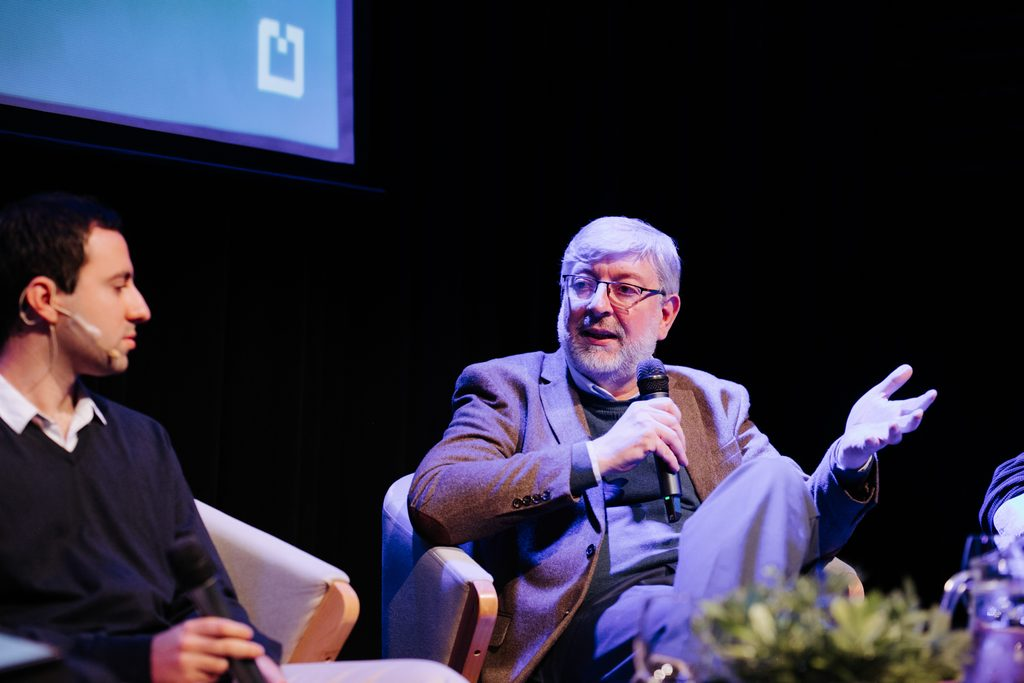
The final part of the event featured a panel moderated by Brañas, with Siri, Saravia, and Pablo García. The discussion revolved around four main topics: the evolution of software development, the value of AI for customers, the validation of new solutions, and the modernization of existing systems.
One of the most visible changes is happening within software development itself. When asked what developers do today that they weren’t doing a year ago, Saravia pointed out that everyday work has changed considerably: teams are spending more and more time interacting with agents that analyze, write, test, and debug code, rather than manually writing every line.
Artificial intelligence can assist at different stages of the software development lifecycle, from initial analysis to code generation, testing, and bug fixing. This does not mean technical expertise is becoming less necessary. The ability to interpret results, understand systems, evaluate AI-driven decisions, and validate solutions still depends on the knowledge and experience of development teams.
Artificial intelligence and legacy system modernization
Another topic discussed during the panel was the potential of artificial intelligence to facilitate legacy system modernization.
For years, working on an older platform meant spending weeks understanding its code, dependencies, and business rules, especially when up-to-date documentation was unavailable.
Today, AI tools can assist with code analysis, dependency identification, understanding existing structures, and system documentation. This can speed up certain stages of the modernization process, although technical assessment, validation, and change planning remain essential.
In this regard, Saravia highlighted the new possibilities these tools offer, stating: “With AI, the ability to create and interpret is now infinite.” For organizations that rely on applications developed years ago, this evolution can make it easier to tackle projects that were previously too complex or costly.
The value of AI for businesses: new opportunities and challenges
During the panel, Pablo García focused on where customers can find value when artificial intelligence makes it possible to build solutions faster.
The ability to validate ideas earlier, improve quality, and take on projects that were previously difficult to approach expands what organizations can develop.
In this context, adopting artificial intelligence does not simply mean adding a new technological tool. It involves identifying opportunities for improvement, understanding existing processes, and evaluating how these capabilities can be integrated to deliver tangible results.
Santiago Siri also highlighted the far-reaching nature of this transformation. Drawing on his experience giving talks across different Argentine provinces and to audiences from a wide range of industries, he pointed out that the impact of artificial intelligence is not limited to the technology sector. “What is happening is revolutionary,” he said, emphasizing the reach of a change that cuts across very different economic activities. “It is transversal to everything,” he concluded.
At the same time, the expansion of AI agents brings new challenges for organizations. Information security, execution permissions, action oversight, and result validation are essential considerations when incorporating these systems into business processes.
An agent’s autonomy must be supported by clear control criteria, especially when it interacts with sensitive information or tools that can modify systems and execute operations.
IA Insider 2.0: exploring the future of artificial intelligence in business
IA Insider 2.0 provided an opportunity to bring together different perspectives on a technology that is beginning to play an increasingly active role in the way organizations work.
The shift from assistance to execution opens up new possibilities for automating tasks, developing solutions, unlocking value from existing systems, and exploring projects that may previously have been too complex or costly. At the same time, it raises new questions about security, oversight, and the role people continue to play at every stage.
For Urudata Software, these opportunities for exchange are part of an ongoing exploration of how artificial intelligence can be incorporated into software development and business processes. The evolution of AI is not just about what these tools can answer, but also about what they can do and the value they can deliver when properly integrated into a company’s processes.
Is your company exploring ways to incorporate artificial intelligence and automation into its processes? At Urudata Software, we develop custom technology solutions to help organizations optimize operations, modernize their systems, and make the most of the opportunities offered by artificial intelligence.